
 Why We’ve Changed How We Remove Ear Wax

At Eaton and Australind Medical Centres, we are committed to providing you with the safest, most effective care available. As part of that commitment, we have made an important change to the way we manage ear wax — and we want to explain exactly why, and what it means for you.
We have stopped offering ear syringing (also called ear irrigation or an “ear wash-out”) and replaced it with two safer, more modern methods: microsuction and manual evacuation. These procedures will now be offered through our new Ear Wax Management Clinic, run by specially trained practice nurses.
We understand this change may raise questions, particularly for those of you who have relied on ear syringing for many years. Please read on — we hope this letter gives you a clear understanding of why we made this decision and what to expect going forward.
What Was Ear Syringing, and Why Did We Offer It?
Ear syringing has been a common way to remove built-up ear wax for decades. The procedure involved gently pumping warm water into the ear canal using a syringe or small irrigation device. The water pressure would dislodge and flush out the wax.
For a long time, ear syringing was considered a routine and generally safe procedure. At our practice, it was performed by our doctors and was either bulk-billed or charged at a small gap fee, plus $5 for the irrigation attachment. Many of you have used this service without any problems, and we are grateful for your trust in us over the years.
However, as medical evidence has evolved, it has become increasingly clear that ear syringing carries real risks — risks that we are no longer comfortable accepting on your behalf.
Why Ear Syringing Carries Too Much Risk
Ear syringing may seem simple, but the ear canal is a delicate structure. Introducing water under pressure into such a confined space can cause a range of complications — some minor, and some serious.
According to a clinical review published in Australian Family Physician (Poulton et al., 2015), 1 in 1000 patients experience major complications from ear syringing. Furthermore, one in five medico-legal cases involving general practitioners in Australia are related to ear syringing — a striking statistic that reflects just how often things can go wrong.
Possible complications from ear syringing include:
- Ear infections — Water left in the ear canal creates a warm, moist environment where bacteria can grow, leading to outer or middle ear infections (otitis externa or otitis media)
- Perforated eardrum — Water pressure can damage the eardrum, particularly if it is already weakened
- Tinnitus and dizziness — Nerve irritation during the procedure can cause temporary but distressing ringing in the ears or vertigo
- Pain and ear canal trauma — The delicate skin lining the ear canal can be damaged by water pressure or contact with the syringe tip
- Failure to remove the wax — Syringing is often ineffective for hard or deeply impacted wax, meaning the procedure carries risk without delivering the expected benefit
There are also many patients for whom ear syringing should never have been performed in the first place. It is contraindicated — meaning it should be avoided — in anyone with:
- A current or previous ear infection
- A perforated or damaged eardrum
- A history of ear surgery
- Significant hearing loss in one ear
- Diabetes or a compromised immune system
Given these risks and contraindications, and the availability of significantly safer alternatives, we made the decision to discontinue ear syringing at our practice.
What Are Microsuction and Manual Evacuation?
These are two modern, dry methods of ear wax removal that avoid the key problems associated with syringing — most importantly, the introduction of water into the ear canal.
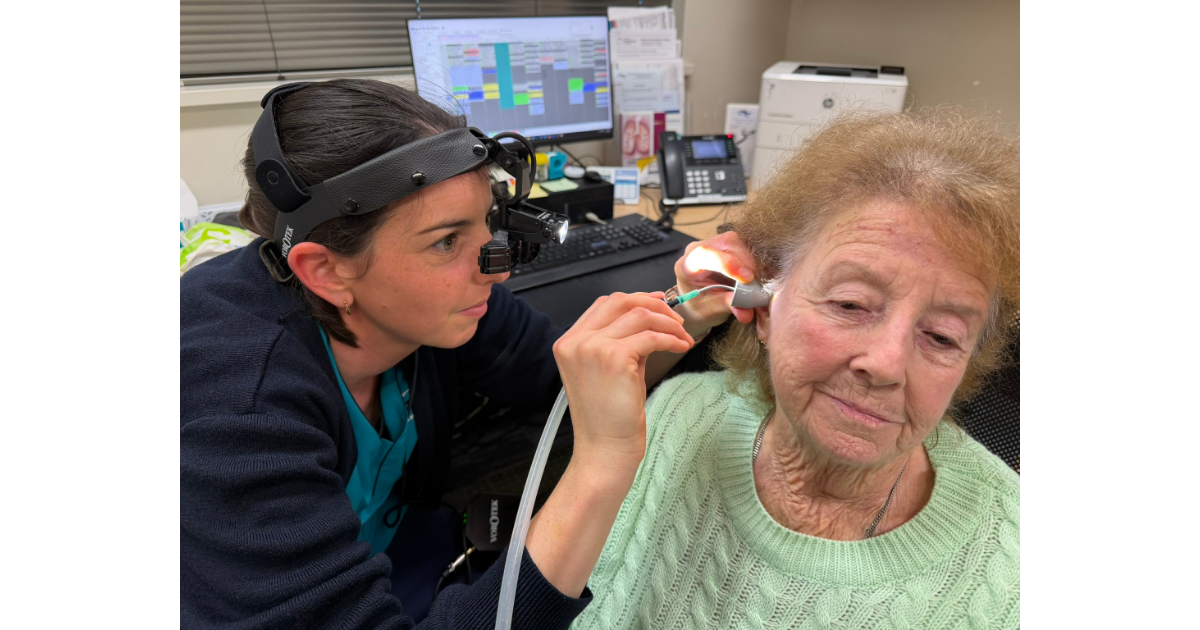
Microsuction uses a very fine, low-pressure suction device to gently draw wax out of the ear canal. The procedure is performed under magnification, giving the clinician a clear, detailed view of the ear canal at all times. This precision makes the procedure both safer and more effective. Because no water is involved, the risk of infection is significantly reduced, and microsuction can be safely performed on patients who would otherwise be excluded from ear syringing — including those with perforated eardrums or a history of ear surgery.
Manual evacuation involves the careful use of small, specialised instruments to physically remove wax from the ear canal. Like microsuction, it is a dry technique performed under direct visualisation. It is particularly useful for removing wax that is positioned in a way that suction alone cannot easily reach.
Both methods are widely regarded by ear, nose and throat (ENT) specialists as the preferred standard of care for ear wax removal. A 2014 study published in the Journal of Laryngology and Otology (Prowse & Milla) found microsuction to be both efficacious and well-tolerated by patients. The most commonly reported side effect is a brief sensation of dizziness immediately after the procedure, which typically resolves within minutes.
Our New Ear Wax Management Clinic
To deliver these procedures to our patients, we have established a dedicated Ear Wax Management Clinic at our practice. This clinic is led by our practice nurses, who have undergone — or are currently undergoing — specialist training in cerumenology (the clinical management of ear wax).
Three of our nurses have already completed training as a cerumenologists. All are supervised and supported by our clinical team to ensure a safe, high-quality experience for every patient.
Appointments are conducted in a calm, private setting with all the equipment necessary to assess and treat your ears safely. We don’t recommend the use of softening ear drops any longer leading up to your appointment. There is no preparation needed. You just turn up for your appointment.
Understanding the New Fees
We recognise that this is a significant change for many of our patients, and we want to be completely transparent about the costs involved.
Ear syringing was previously performed by our doctors and could be claimed through Medicare (bulk-billed or with a small gap fee). Unfortunately, ear wax removal by microsuction and manual evacuation is not covered by Medicare when performed in a general practice setting. As a result, the Ear Wax Management Clinic will be privately billed.
Our fees are as follows:
- Routine ear wax removal: $120
- Complex ear wax removal: $220
A complex appointment may be required when wax is particularly hard, deeply impacted, or when there are other complicating factors that require additional time and care.
We fully understand that this represents a meaningful cost increase, and we are especially mindful of the impact on our pensioner patients who have been accessing this service at little to no cost. We want you to know that this change was not made lightly or for financial reasons. It was made because the method you were previously receiving carries risks we can no longer justify, and because you deserve the safest option available.
If cost is a concern, please speak with our reception team when booking. We are happy to discuss your options and ensure you have all the information you need before making a decision.
What Should You Do If You Have Ear Wax Problems?
If you are experiencing symptoms such as a blocked or muffled feeling in your ears, hearing loss, ear pain, ringing, or dizziness, ear wax may be contributing to the problem.
We recommend:
- Avoiding cotton buds — these tend to push wax deeper into the canal and can make removal more difficult, and/or
- Not attempting to remove wax at home with objects inserted into the ear canal
To book an appointment with our Ear Wax Management Clinic, please contact our reception team on 08 9724 3311. Our staff will let you know which type of appointment is appropriate for your situation.
A Note to Our Long-Standing Patients
We are aware that change is not always welcome, particularly when it affects something as familiar as a service you have relied upon for years. We are grateful for the trust you have placed in us, and we want to reassure you that this decision reflects our ongoing commitment to your safety and wellbeing.
If you have any questions or concerns about the new clinic, the procedures, or the fees, please do not hesitate to contact us. We are always happy to talk things through with you.
Thank you for your understanding.
The Clinical Team
Eaton and Australind Medical Centres
